
Tool Production
From Process Simulation , Tool Design to Tool production and delivery at Customer house 36 years Experience
Mold Manufacturing
Design & Manufacturing Tools We Use
Technical Targets
Quick Quote
Request Quote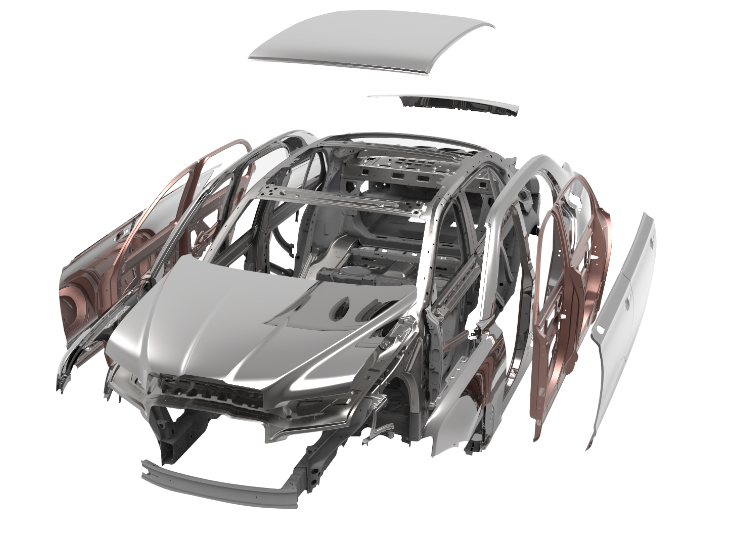
Tandem Molds
Tandem molds are ideal for large-format panels and exterior body parts with linked units. With multi-point feeding and synchronized operations we increase production speed while preserving surface integrity.
- Large-part stability
- Multi-station assembly and processing
- Optimised cooling / thermal balance design
Transfer Molds
Transfer molds provide flexibility for multi-operation processes; allowing different operations to be automated on a single line. They are preferred for complex geometries and high production speeds.
- Fast cycle times
- Automation and robot integration
- High repeatability
Progressive Molds
Progressive molds are efficient for high-volume sheet metal production. By executing different operations (cutting, bending, piercing) progressively within a single die, they reduce waste and speed up production.
- Thin-tolerance sheet part production
- Integrated control checkpoints
- Fast tooling changeover
Aluminium & Steel Molds
Material selection depends on part application, production volumes and surface requirements. Aluminium molds are ideal for rapid prototyping and low-to-mid volumes; steel molds offer durability and long service life for high volumes.
- Aluminium: fast machining, low-cost prototyping
- Steel (H13, P20 etc.): high wear resistance, long life
- Surface durability increased via heat treatment and hardening
Exterior Panel Expertise
In exterior panel production, surface quality and dimensional stability are our priorities. For complex surfaces we use specialised copying, 3D scanning for reverse engineering and process optimisation.
- Mold surface finishing (polishing, micro-texturing)
- Dimensional stability analysis
- Design for panel rigidity and assembly tolerances
Laser Hardening & Cladding
We enhance mold surface wear resistance using laser hardening and cladding techniques, applying local repairs and life-extending coatings. These processes are cost-effective for high-friction and abrasive applications.
- Surface hardening (laser, nitriding alternatives)
- Cladding: low-thermal-impact surface coating instead of welding
- Reported hardness and microstructure verification